Showing posts with label cancer risk. Show all posts
Showing posts with label cancer risk. Show all posts
Let's put it all in perspective
A lttle negativity
Today is the Fourth of July and (unless you are still fighting a damn cold) most Americans will be enjoying barbecues, fireworks, the beach, and having all sorts of fun.
Then the media has to come along like a wet blanket. First we have, How To Avoid Getting Cancer From Your BBQ. After the doom and gloom headline, the real answer comes buried way down. "If you’re grilling and following the proper safety tips, the risk of getting cancer from grilling food is very low."
So first the fear and then the honest truth.
Then we have the fact that there are carcinogens in Pepsi. I don't think I have had a Pepsi myself in decades. Who still drinks that much soda any more? And who ever thought Pepsi was a healthy beverage?
But I digress. Just more of the media being a wet blanket.
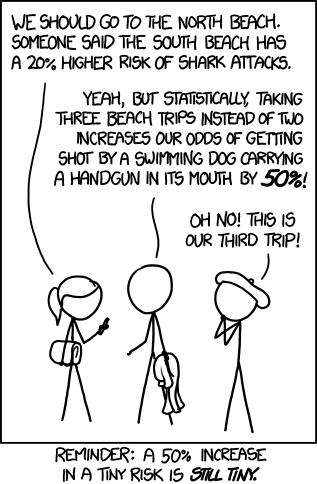
Yes they are ominous warnings. Cancer risk is nothing to minimize but let's keep risks to real levels and not over stress them. The media times their stories to make sure that they get the most coverage because its a time of year when more and more will be barbecuing or drinking soda. These would get less coverage in January simply because its cold and there is less barbecuing and more hot chocolate.
Happy July 4th to you all, just watch out for your carcinogen intake and out of line negativity.
More on the breast cancer treatment gap
A few weeks ago I blogged about the breast cancer treatment gap where women who are told they are BRCA positive only have surgical options to lower their risk of breast or ovarian cancer. It turns out this is growing in significance because of genetic testing progress.
This started when Angelina Jolie announced she had a prophylactic bilateral mastectomy because she was BRCA positive. Unless you have been living under a rock you couldn't have missed that story in the news recently.
While many people are supportive of her decision, some are not. Here is an article on the other side of the issue - which shows how some people are not in favor of this type of prophylactic surgery. I think this kind of decision is very personal but unfortunately there are not a lot of options for those with who test for the genetic mutation.
We can also add in the fact that insurers often are reluctant to pay for the tests. Not just the BRCA test but others for Cowden's syndrome or Li-Fraumeni syndrome, both of which are shown to raise risk for breast and other cancers.
Finally, let's top this all off with the fact that University of Alberta researchers have pinpointed markers for sporadic cases of breast cancer - meaning ones without a family history. Or about 80% of all breast cancers could be caused by these markers. They suggest that women with the marker could then proceed with prophylatic options. We know what that means.
So let's add it up:
So where does that leave the patients? Over the barrel without a lot of options.
This started when Angelina Jolie announced she had a prophylactic bilateral mastectomy because she was BRCA positive. Unless you have been living under a rock you couldn't have missed that story in the news recently.
While many people are supportive of her decision, some are not. Here is an article on the other side of the issue - which shows how some people are not in favor of this type of prophylactic surgery. I think this kind of decision is very personal but unfortunately there are not a lot of options for those with who test for the genetic mutation.
We can also add in the fact that insurers often are reluctant to pay for the tests. Not just the BRCA test but others for Cowden's syndrome or Li-Fraumeni syndrome, both of which are shown to raise risk for breast and other cancers.
Finally, let's top this all off with the fact that University of Alberta researchers have pinpointed markers for sporadic cases of breast cancer - meaning ones without a family history. Or about 80% of all breast cancers could be caused by these markers. They suggest that women with the marker could then proceed with prophylatic options. We know what that means.
So let's add it up:
- Researchers are finding genetic causes to more cancers.
- Insurers don't want to pay for genetic tests.
- The only options for women with the genetic mutations or markers are significant disfiguring surgery with long term complications.
So where does that leave the patients? Over the barrel without a lot of options.
A Workout a Day Keeps The Cancer Cooties Away.
Maybe an apple a day too. When I was in treatment for breast cancer, I would go for a daily walk, every day unless hospitalized. It helped with destressing, medication side effects, and I really liked getting outside and stepping away from the doom and gloom. No one ever told me not to walk. The nurses and doctors all thought it was great.
Since then I have had to join a gym for dilapidated people where there are physical therapists and all sorts of people to help us do things like stand on one foot without falling over. I'm not kidding. I no longer exercise every day because I can't. I need a day off between working out. But I still go to the gym three times a week and I go for a 90 minute walk once a week with a friend. Apparently I am on the right track here.
There will be an announcement at the upcoming ASCO (American Society of Clinical Oncologists) annual meeting in June about the importance of daily exercise for better cancer outcomes and reducing cancer risk. This annual meeting is always full of good news for us cancer people and I do look forward to reading what is announced.
They had a preview meeting the other day where they announced a few tidbits, one of which was the benefits of daily exercise. They call it "A Workout A Day May Keep Cancer Away" but I like my title better.
Today I will go for my walk with a friend. Tomorrow I will go to the gym. I'm all for keeping the cancer cooties away.
Breast cancer risk reduction
There is a new trend in women who are deemed to be at high risk for breast cancer to have a prophylactic bilateral mastectomy. A mastectomy is not minor surgery and comes with its own set of risks. Women who then want reconstruction can be faced with months of additional surgery as well as the issue of implant replacement later in life. Other side effects can linger such as lymphedema for a lifetime.
A new government task force (who is spending our money on these things) announced that high risk women should consider taking either tamoxifen or raloxifene to reduce their risk. While the drugs carry their own risks, they also can be stopped. A mastectomy is irreversible.
I realize this is a very personal decision and emotions can rule the decision making process. Perhaps this study will help women not make such a drastic step.
Misconceptions about breast cancer risk
Last night we had dinner with a friend who's mother had breast cancer more than 15 years ago. She was talking about her concern about getting breast cancer. I think both her grandmothers and a couple aunts had breast cancer. Several of them had bilateral mastectomies. This is dating back decades to the 1970s and earlier.
She has not been tested for the BRCA genes because it would require her mother to be tested and she didn't want to put her mother through that. That was probably 15 years ago and she hadn't asked since. She was very concerned and sounded like she was sure she would get breast cancer.
I asked her a couple questions. What stage cancer did all her relatives have? She had no idea. She thought they were relatively advanced because of the bilateral mastectomies. But those were done in the 1970s when more radical surgery prevailed.
I also said that the BRCA genes only account for 5-10% of all breast cancers. But I did suggest that even though she was told years ago that she would have to have her mother get tested for the BRCA gene first, maybe times had changed and she could be tested now. She is going to ask her doctor about that now.
Her other comment was that there is cancer on both sides of her family and both her parents had cancer which further reinforced her thought that she would definitely get cancer.
I was somewhat surprised at her misconceptions that she was sure she would get cancer because of her family history. Yes she is probably at higher risk than the average population of getting cancer. But there is no reason to think she definitely will get cancer. And with regular mammograms and annual physicals, anything would probably be caught early.
I think this is a case of her mind getting ahead of reality. You start thinking well everyone else got cancer so I will too and I'll die some kind of horrible death as a result. I hope I was able to reassure her that she is doing the right thing and cancer is not a certainty for her.
Blah, blah, exercise more, blah, blah
Right up therer with common medical advice - eat right, stand up straight, floss - is get some exercise. When have they ever told us not to exercise? Exercise is good for all sorts of things - we know this. This is why we had gym class in school and were sent out side to play and went for walks all the time.
There are some downsides to exercise - blisters from badly fitting or the wrong shoes. Or, muscle aches and pains for the days when you might 'over do' things by a tiny bit. Or stretching injuries if you perchance are in the slightly wrong position and end up with a very painful knee (not that I would know this by experience or anything).
But there is another new benefit to exercise - reducing your breast cancer risk. Who would have thought? Duh. Exercise is known to be good for us. But, here's the real story:
"Moderate exercise tied to lower breast cancer risk
...Women who exercise moderately may be less likely than their inactive peers to develop breast cancer after menopause, a study published Monday suggests.
And it did not take a vigorous workout; regular exercise at any intensity level was linked to a lower breast cancer risk, the researchers say.
Still, there are reasons to believe it can, said lead researcher Lauren McCullough, of the University of North Carolina, Chapel Hill.
One possible way is indirectly, by reducing body fat, McCullough said in an interview. Excess body fat is related to higher levels of certain hormones, including estrogen, as well as substances known as growth factors, which can feed tumor development.
Researchers found that of more than 3,000 women with and without breast cancer, those who'd exercised during their childbearing years were less likely to develop the cancer after menopause.
The findings, reported in the journal Cancer, add to a number of past studies tying regular exercise to lower breast cancer odds.
But like those past studies, this latest one can only point to a correlation: It does not prove that exercise, itself, is what cut women's breast cancer risk.
But exercise might also have direct effects, McCullough said -- by boosting the immune system or the body's ability to clear cell-damaging "free radicals."
That is all speculation for now.
But, McCullough said, the findings do support the general health recommendation that adults stay active throughout their lives."
So what does this tell us? Speculation is telling the researchers that exercise can lower your breast cancer risk. So before you adopt a mighty exercise plan to reduce your risk of breast cancer, just remember that it is speculation that is driving this.
This also reminds that all these studies that tell us things like eating spinach is good for us - some is based on science and some is based on speculation because there appears to be a correlation. And it always needs more research to prove anything.
Carcinogenic cancer treatment
Cancer treatment can be carcinogenic. Chemo can cause leukemia and lymphomas. Radiation can cause other cancers. Actually having these treatments greatly increases your risk of later cancers, never mind the fact that once you get cancer the first time, you are put in the higher risk category already.
A study was done (because we needed another study - we are keeping these researchers employed) on people treated with radiation for cancer while young, are at greater risk of developing breast cancer.
The Children's Oncology Group recommends women treated with higher doses of radiation begin breast cancer screenings at age 25, or eight years after finishing radiation, whichever comes later, using both mammograms and MRI, or magnetic resonance imaging. Typically, medical societies recommend women at normal risk for breast cancer begin getting screening at age 40 or 50.
Diller says doctors may need to re-evaluate those guidelines for pediatric cancer survivors. She found that even women given lower doses of therapeutic radiation had a significant risk of breast cancer. That risk may continue to rise, too, as childhood cancer survivors age. Few survived the disease before the 1970s, so many of the first survivors are just hitting middle age."
So all of us 'guinea pigs' so to speak back then are testing the limits of the five year survival rates now that we are 30 or more years out. I did not have chest radiation but I was treated with radioactive iodine to get rid of the rest of my thyroid in 1981. Did that cause my breast cancer or increase my risk of breast cancer? I have no idea. My doctors tell me my cancers are unrelated but exposure to radiation or radioactivity is a known cancer risk so who knows.
So I guess they used toxic chemicals and radiation to save us but these same items that saved us may help undo us in the long run. Maybe if they can't cure cancer yet, they can find treatments that aren't as toxic in the long run.
A study was done (because we needed another study - we are keeping these researchers employed) on people treated with radiation for cancer while young, are at greater risk of developing breast cancer.
"Risk of Breast Cancer by Age 50
- Women treated with chest radiation for any pediatric cancer: 24%
- Women treated with larger dose of chest radiation for Hodgkin lymphoma: 30%
- Women with BRCA1 mutation: 31%
- Women with BRCA2 mutation: 10%
- Women with average risk: 4%"
The Children's Oncology Group recommends women treated with higher doses of radiation begin breast cancer screenings at age 25, or eight years after finishing radiation, whichever comes later, using both mammograms and MRI, or magnetic resonance imaging. Typically, medical societies recommend women at normal risk for breast cancer begin getting screening at age 40 or 50.
Diller says doctors may need to re-evaluate those guidelines for pediatric cancer survivors. She found that even women given lower doses of therapeutic radiation had a significant risk of breast cancer. That risk may continue to rise, too, as childhood cancer survivors age. Few survived the disease before the 1970s, so many of the first survivors are just hitting middle age."
So all of us 'guinea pigs' so to speak back then are testing the limits of the five year survival rates now that we are 30 or more years out. I did not have chest radiation but I was treated with radioactive iodine to get rid of the rest of my thyroid in 1981. Did that cause my breast cancer or increase my risk of breast cancer? I have no idea. My doctors tell me my cancers are unrelated but exposure to radiation or radioactivity is a known cancer risk so who knows.
So I guess they used toxic chemicals and radiation to save us but these same items that saved us may help undo us in the long run. Maybe if they can't cure cancer yet, they can find treatments that aren't as toxic in the long run.
News that is useless to me
I didn't use to be (so) fat. I used to be a size 8ish and am now a size 12ish if you really need to know. My size 8ness lasted until that first chemo when they pumped me full of steroids....
Now research says lose a little weight and greatly reduce that breast cancer risk. That's not very helpful. I am in the much higher than normal risk pool because I already had it.
More research (because we needed more research) tells us that obese people are more likely to be diagnosed with advanced and aggressive thyroid cancer. This is also a little too late for me because I don't have a thyroid (thank you cancer) but it could always come back - but we just won't think about THOSE things.
So this is useless news to me but maybe it will help others. Not that you haven't heard it before - we all need to lose weight.
Cancer myths
There are more myths about breast cancer and all other cancers. You know the ones - you can get breast cancer from wearing deodorant, underwire bras, living near power lines, blah, blah, blah. If anyone tells you they know how you got your cancer, just like if they tell you their 'cure' for cancer, they are full of you know what. And you can tell them (as politely as you want) to go take a hike.
One myth I think is overwhelmingly stupid. 1 in 8 is not your chance of getting breast cancer in your lifetime. 1 in 8 is the chance you will get breast cancer when you are 85. The stupidity that allows this one never ceases to amaze me. If anyone says it, I would reply 'liar, liar, pants on fire'.
But there is one myth that is still a myth unfortunately. That is that breast cancer is preventable.
'Alas, no. Although it is possible to identify risk factors (such as family history and inherited gene mutations) and make lifestyle changes that can lower your risk (reducing or eliminating alcohol consumption, losing weight, getting regular exercise and screenings, and quitting smoking), roughly 70% of women diagnosed with breast cancer have no identifiable risk factors, meaning that the disease occurs largely by chance and according to as-yet-unexplained factors.'
You can try as much as you might but you can not eliminate the risk of breast or any other cancer in your life. This is the one myth I would like to see proven.
Subscribe to:
Posts (Atom)
